
 USD
USDUnderstanding Fungal Biofilms
Understanding Fungal Biofilms
Researchers at the University of Pretoria published “Biofilm characterization of the maize rot-causing pathogen, Fusarium verticillioides in the journal Biofouling. They cited Genizer’s particle sizer in part of this study. Zea mays is the scientific name for maize, also known as corn in the US. Corn is an important crop in Sub-Saharan Africa, where the University of Pretoria is located.
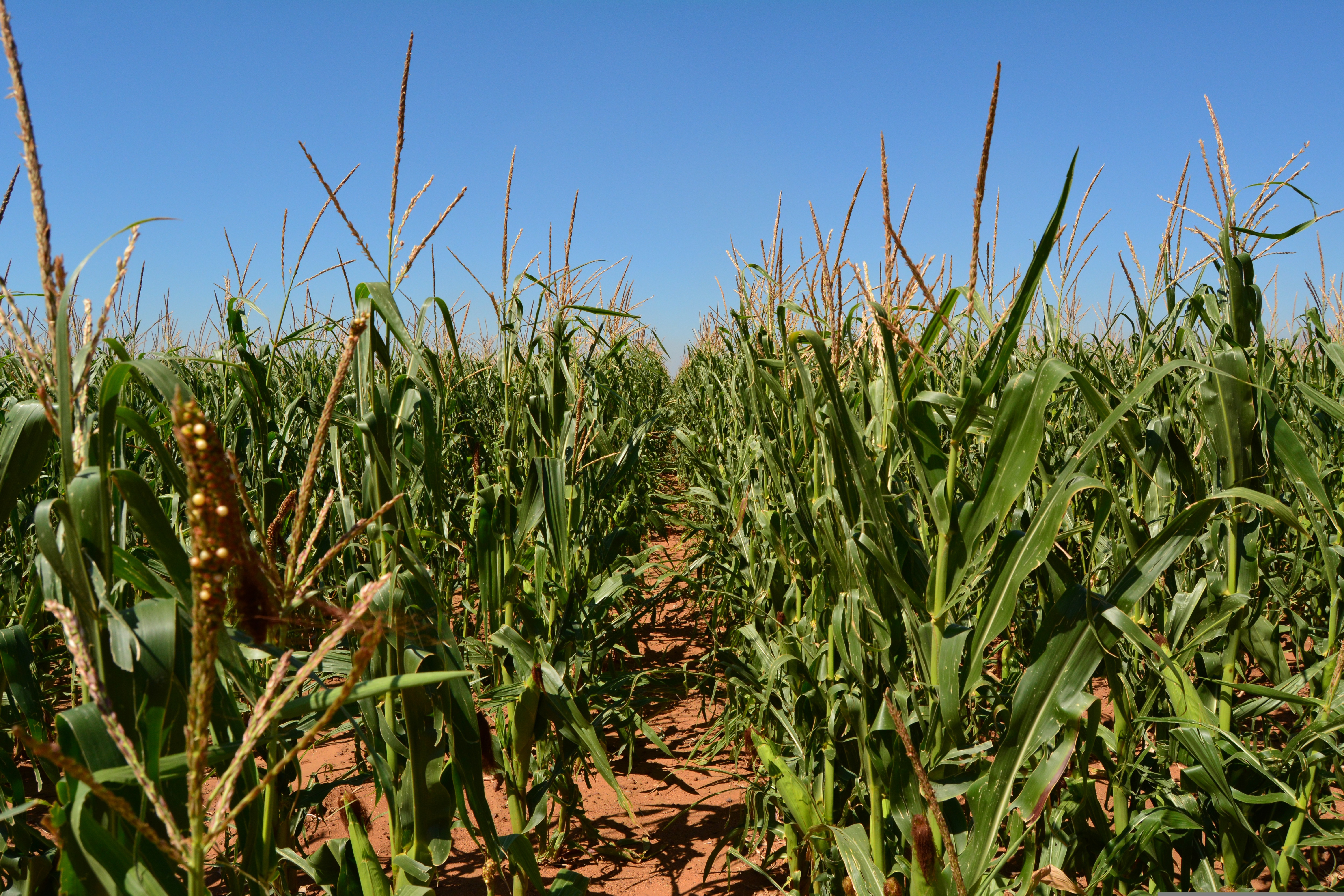
Corn is highly susceptible to various fungal pathogens. F. verticillioides is a major fungal pathogen of corn. It damages crops and produces mycotoxins. Consumption of mycotoxin contaminated corn is linked to diseases like oesophageal and liver cancer. Fungi can contaminate tools and machinery in agricultural work, allowing them to spread. The fungi form biofilms, making it more difficult to sanitize tools.
Biofilms are a type of aggregate 3D microbial structure encased in extracellular polymeric substances (EPS), primarily made of polysaccharides, DNA and proteins. Biofilms can help microbes avoid host immune system response, resist drug treatment, and outcompete other organisms. Biofilms have been studied in depth in the medical field. In agriculture, the study is much shallower. Researchers at the University of Pretoria added to our knowledge by characterizing the F. verticillioides biofilm in a laboratory setting.
By TUBS - This vector image includes parts that have been taken or adapted from this file:, CC BY-SA 3.0, https://commons.wikimedia.org/w/index.php?curid=17455490
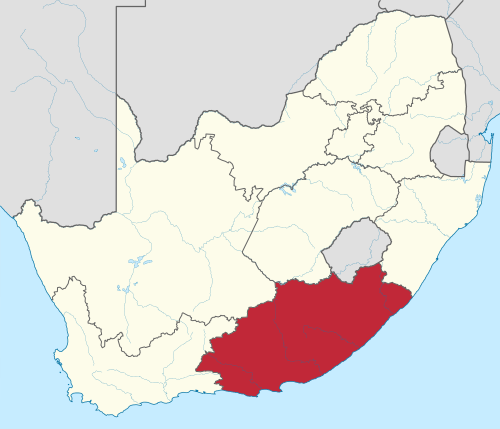
The bacterial strains in the study were isolated from corn from fields in the Eastern Cape Province of South Africa.
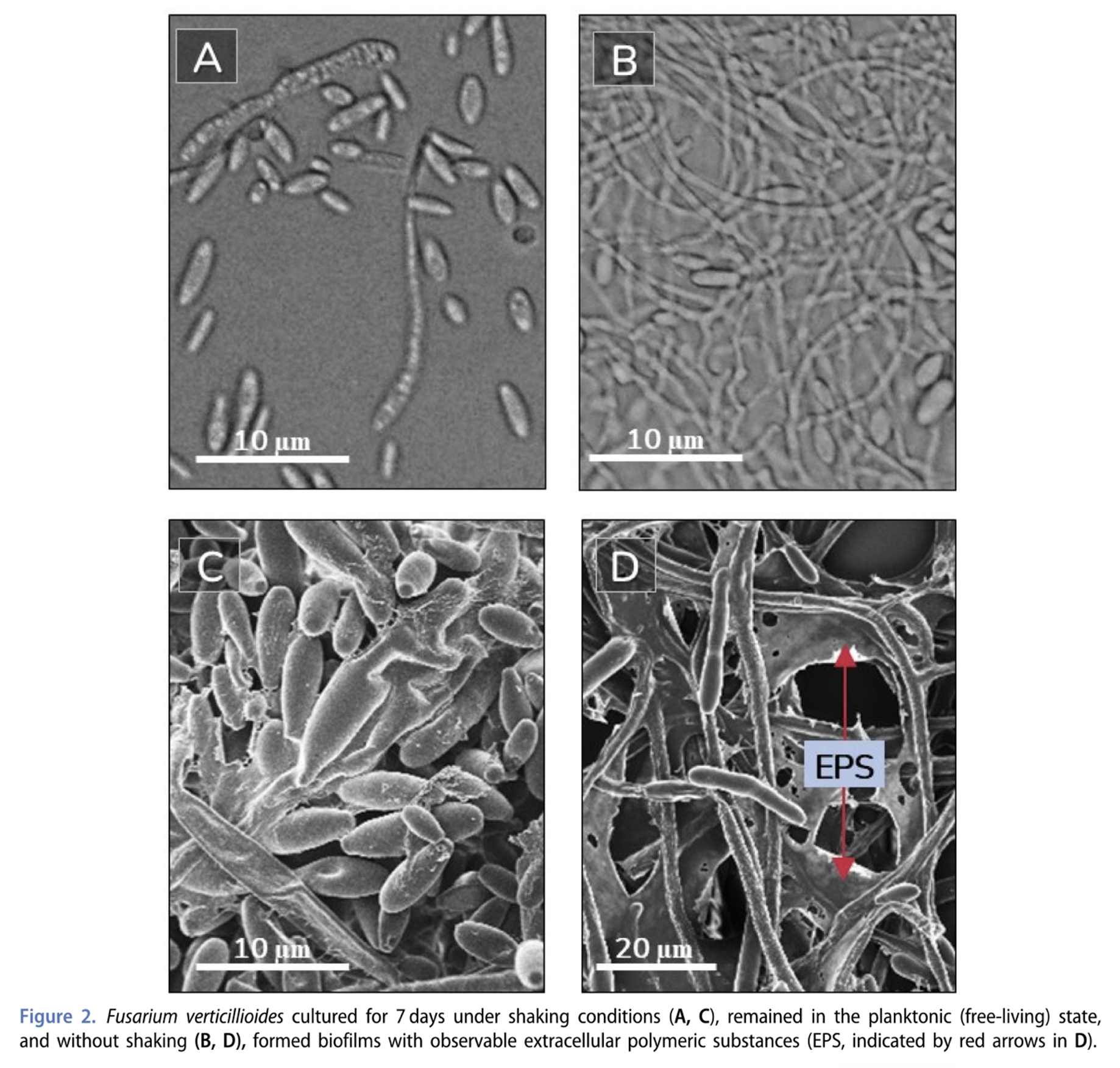
Researchers tested the impact of shaking the incubated sample on F. verticillioides biofilm formation. They found that shaking inhibited biofilm formation. Researchers also tested different temperature and pH conditions, using EPS production to evaluate biofilm formation. The most EPS was produced at pH 5, but the biofilm formed in a range of different pH and temperatures. The ability to form a biofilm in different environments may help F. verticillioides survive in vivo.
Another aspect the researchers studied was the impact of extracellular DNA (eDNA). The EPS matrix contains eDNA. Prior studies show the importance of eDNA in biofilms for structure maintenance, forming certain conformations, antimicrobial resistance and genetic transformation. eDNA is also a source of energy and nutrients. Its many roles make eDNA an interesting antimicrobial target for biofilms. The researchers used DNase I, an enzyme that lyses DNA, to determine the impact of eDNA on biofilm formation. Adding DNase I reduced the biofilm stability of F. verticillioides. This demonstrates the importance of eDNA on biofilm stability.
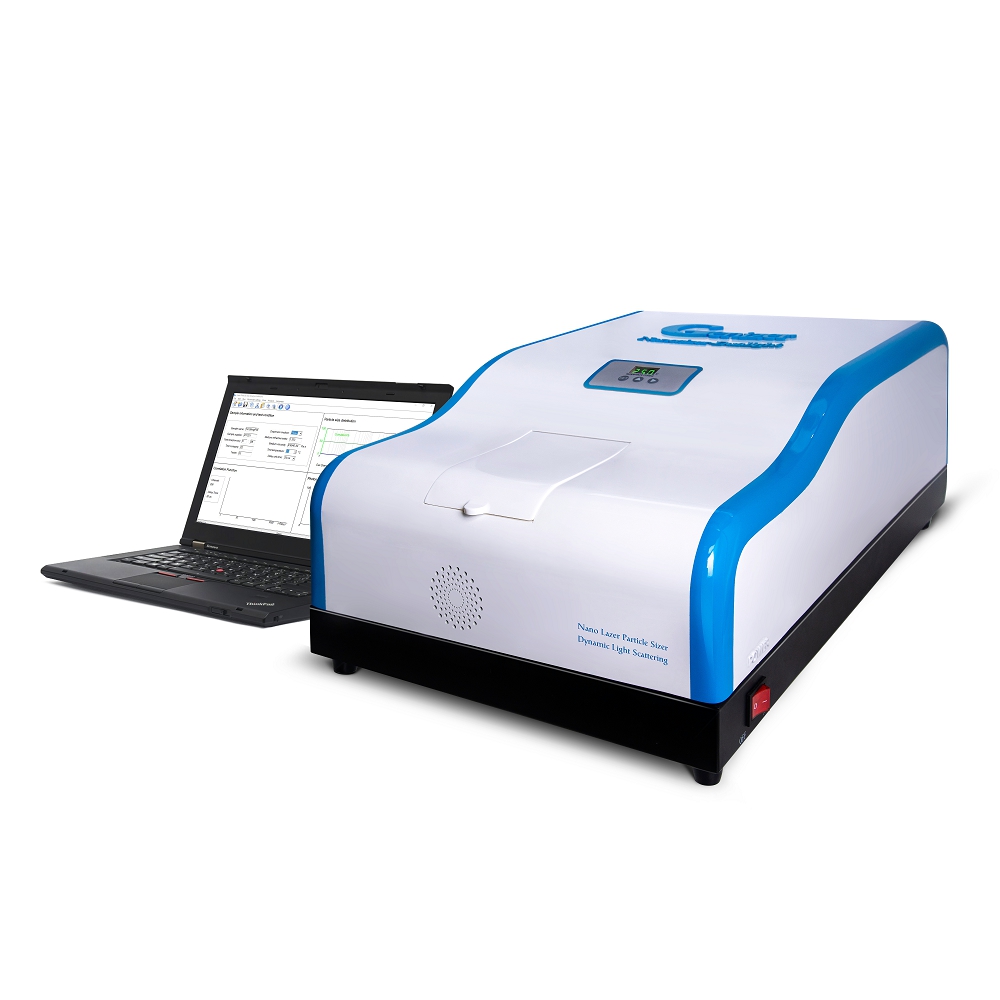
Microbes excrete large polymers called exopolysaccharides as part of the EPS building blocks to aid biofilm formation. Exopolysaccharides serve a variety of functions that help a microbe thrive. Researchers used Genizer’s dual light Nano Particle Sizer to determine the particle size of the F. verticillioides exopolysaccharide. The Nano Particle size uses dynamic light scattering to determine the size of particles in solution. When compared to other fungi, the F. verticillioides expolysaccharide had a larger particle diameter, despite its lower molecular mass. Researchers think that the exopolysaccharide’s polysaccharide chains may tangle with each other in solution, impacting the viscosity, size, and arrangement of the exopolysaccharide.
The next step is to get out of the lab and record biofilms in the field, as well as more fungal strains. This research and future work bring us closer to antibiofilm drugs and other methods of reducing infections in corn. Ultimately, it builds towards reducing mycotoxin consumption and disease.
Read the full paper: https://www.tandfonline.com/doi/epdf/10.1080/08927014.2025.2512097?needAccess=true
Learn more about the Particle sizer: https://www.genizer.com/dual-light-nano-particle-sizer_p0033.html
Researchers at the University of Pretoria published “Biofilm characterization of the maize rot-causing pathogen, Fusarium verticillioides in the journal Biofouling. They cited Genizer’s particle sizer in part of this study. Zea mays is the scientific name for maize, also known as corn in the US. Corn is an important crop in Sub-Saharan Africa, where the University of Pretoria is located.
Corn is highly susceptible to various fungal pathogens. F. verticillioides is a major fungal pathogen of corn. It damages crops and produces mycotoxins. Consumption of mycotoxin contaminated corn is linked to diseases like oesophageal and liver cancer. Fungi can contaminate tools and machinery in agricultural work, allowing them to spread. The fungi form biofilms, making it more difficult to sanitize tools.
Biofilms are a type of aggregate 3D microbial structure encased in extracellular polymeric substances (EPS), primarily made of polysaccharides, DNA and proteins. Biofilms can help microbes avoid host immune system response, resist drug treatment, and outcompete other organisms. Biofilms have been studied in depth in the medical field. In agriculture, the study is much shallower. Researchers at the University of Pretoria added to our knowledge by characterizing the F. verticillioides biofilm in a laboratory setting.
By TUBS - This vector image includes parts that have been taken or adapted from this file:, CC BY-SA 3.0, https://commons.wikimedia.org/w/index.php?curid=17455490
The bacterial strains in the study were isolated from corn from fields in the Eastern Cape Province of South Africa.
Researchers tested the impact of shaking the incubated sample on F. verticillioides biofilm formation. They found that shaking inhibited biofilm formation. Researchers also tested different temperature and pH conditions, using EPS production to evaluate biofilm formation. The most EPS was produced at pH 5, but the biofilm formed in a range of different pH and temperatures. The ability to form a biofilm in different environments may help F. verticillioides survive in vivo.
Another aspect the researchers studied was the impact of extracellular DNA (eDNA). The EPS matrix contains eDNA. Prior studies show the importance of eDNA in biofilms for structure maintenance, forming certain conformations, antimicrobial resistance and genetic transformation. eDNA is also a source of energy and nutrients. Its many roles make eDNA an interesting antimicrobial target for biofilms. The researchers used DNase I, an enzyme that lyses DNA, to determine the impact of eDNA on biofilm formation. Adding DNase I reduced the biofilm stability of F. verticillioides. This demonstrates the importance of eDNA on biofilm stability.
Microbes excrete large polymers called exopolysaccharides as part of the EPS building blocks to aid biofilm formation. Exopolysaccharides serve a variety of functions that help a microbe thrive. Researchers used Genizer’s dual light Nano Particle Sizer to determine the particle size of the F. verticillioides exopolysaccharide. The Nano Particle size uses dynamic light scattering to determine the size of particles in solution. When compared to other fungi, the F. verticillioides expolysaccharide had a larger particle diameter, despite its lower molecular mass. Researchers think that the exopolysaccharide’s polysaccharide chains may tangle with each other in solution, impacting the viscosity, size, and arrangement of the exopolysaccharide.
The next step is to get out of the lab and record biofilms in the field, as well as more fungal strains. This research and future work bring us closer to antibiofilm drugs and other methods of reducing infections in corn. Ultimately, it builds towards reducing mycotoxin consumption and disease.
Read the full paper: https://www.tandfonline.com/doi/epdf/10.1080/08927014.2025.2512097?needAccess=true
Learn more about the Particle sizer: https://www.genizer.com/dual-light-nano-particle-sizer_p0033.html
 949-932-0294 Los Angeles
  Nano@Genizer.com