
 USD
USDGuide to Choosing a Heat Exchanger
The heat exchanger is an equipment accessory used to cool or heat a sample. Genizer’s heat exchangers with a liquid sample and a liquid to hold temperature. Genizer often uses heat exchangers on our high-pressure homogenizers, and clients use them with other systems as well.
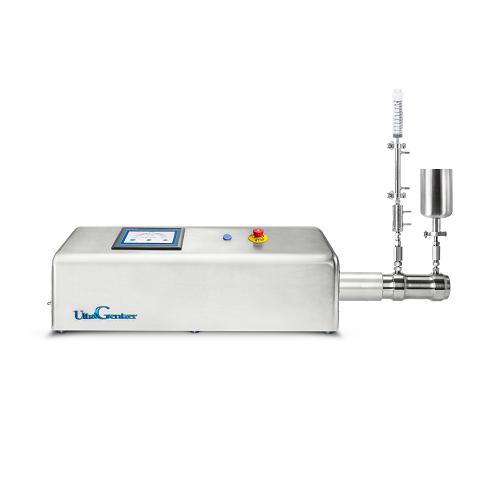
Genizer’s high pressure homogenizers generate heat as a sample runs through the machine. Temperature sensitive samples, for example proteins from cell lysis, need to stay in temperature range to stay stable.
The heat exchanger operates in conjunction with a chiller circulator or pump. The chiller pushes the liquid into tubing that runs around the path for the sample solution. Changing the temperature of the liquid manipulates the sample temperature. The heat exchanger can be used to heat or cool temperature sensitive samples, depending on the temperature of the liquid pumped through it.
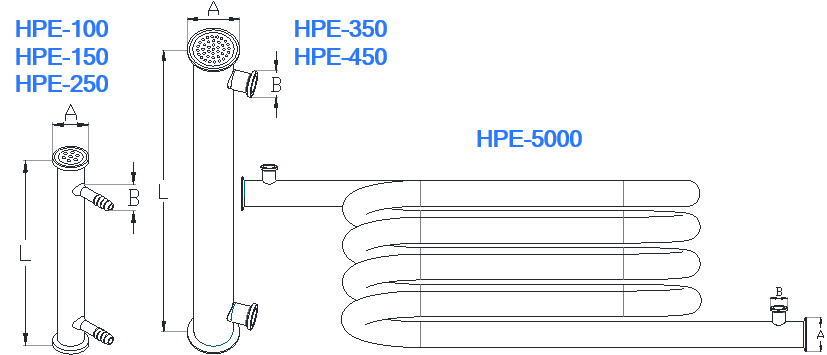
We offer different sizes of heat exchanger based on length. The long the length, the more opportunity there is for heat transfer. Beyond length, Genizer offers two configurations of heat exchanger: 3D and coil heat.
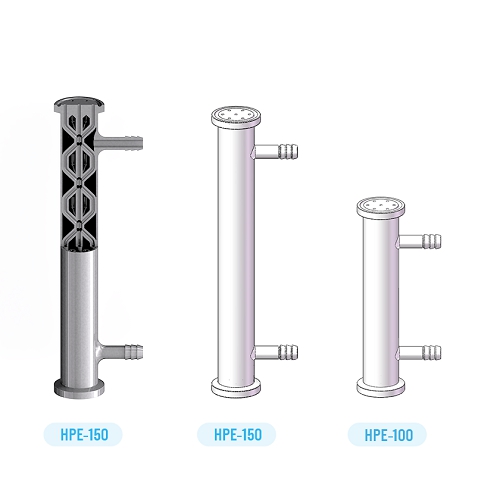
The coil heat exchanger has a greater dead volume. Dead volume is the internal column of the heat exchanger tubing (length x internal area). It indicates the amount of holdup volume held by the heat exchanger. When the flow path for the sample is longer, more sample will need to circulate before it leaves the system.
The HPE-150 3D model has a dead volume of approximately 2-3 mL. The HPE-150 coil heat exchanger has a larger dead volume of around 8-10 mL.
However, the coil heat exchanger provides higher heat exchange efficiency than the 3D version. These two things are correlated. The coiled structure provides a longer flow path, which generally results in better heat exchange performance under the same operating conditions.
Typically, our team will recommend the coil heat exchanger unless dead volume is a concern for your application.
Reach out to our team for more information on what heat exchanger is right for you!
Genizer’s high pressure homogenizers generate heat as a sample runs through the machine. Temperature sensitive samples, for example proteins from cell lysis, need to stay in temperature range to stay stable.
The heat exchanger operates in conjunction with a chiller circulator or pump. The chiller pushes the liquid into tubing that runs around the path for the sample solution. Changing the temperature of the liquid manipulates the sample temperature. The heat exchanger can be used to heat or cool temperature sensitive samples, depending on the temperature of the liquid pumped through it.
We offer different sizes of heat exchanger based on length. The long the length, the more opportunity there is for heat transfer. Beyond length, Genizer offers two configurations of heat exchanger: 3D and coil heat.
The coil heat exchanger has a greater dead volume. Dead volume is the internal column of the heat exchanger tubing (length x internal area). It indicates the amount of holdup volume held by the heat exchanger. When the flow path for the sample is longer, more sample will need to circulate before it leaves the system.
The HPE-150 3D model has a dead volume of approximately 2-3 mL. The HPE-150 coil heat exchanger has a larger dead volume of around 8-10 mL.
However, the coil heat exchanger provides higher heat exchange efficiency than the 3D version. These two things are correlated. The coiled structure provides a longer flow path, which generally results in better heat exchange performance under the same operating conditions.
Typically, our team will recommend the coil heat exchanger unless dead volume is a concern for your application.
Reach out to our team for more information on what heat exchanger is right for you!
 949-932-0294 Los Angeles
  Nano@Genizer.com