
 USD
USD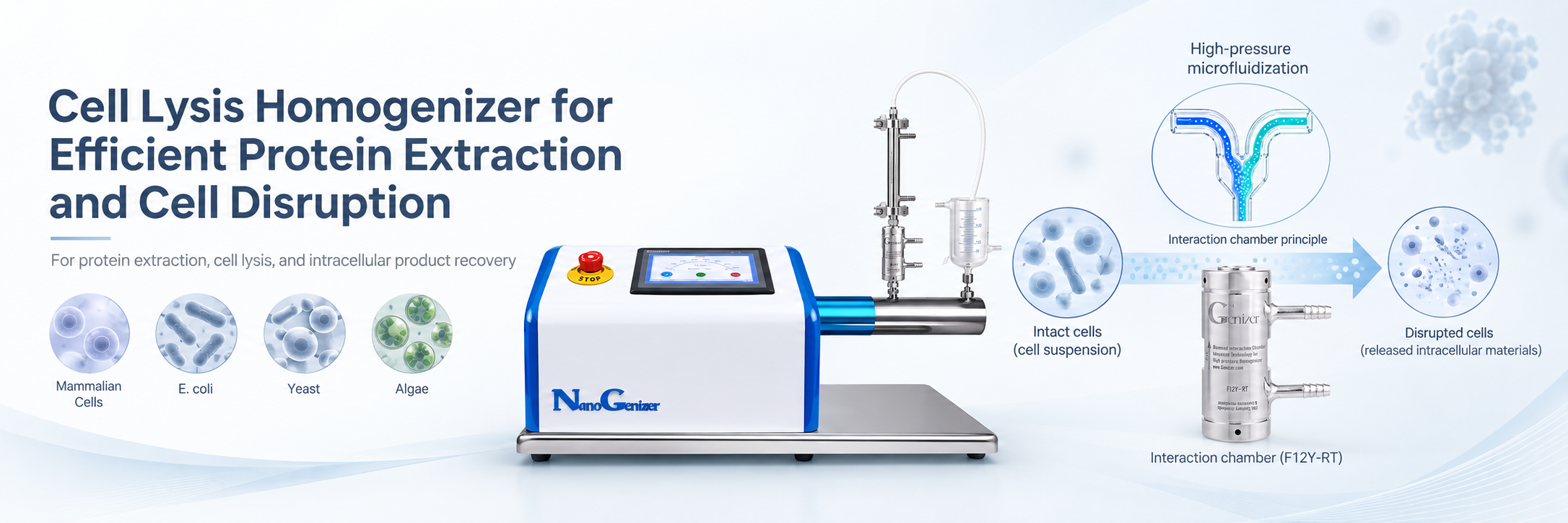
Cell lysis is an essential step in biotechnology and biopharmaceutical processing for releasing intracellular materials such as proteins, enzymes, nucleic acids, and other valuable biological products.
Several cell lysis methods are available, including sonication, bead milling, chemical lysis, and high-pressure homogenization. For bacterial cell lysis, yeast disruption, and applications requiring larger processing volumes, a cell lysis homogenizer provides an efficient, reproducible, and scalable solution.
Why Use a Homogenizer for Cell Lysis?
During high-pressure homogenization, a cell suspension is pressurized and forced through a precisely engineered interaction chamber. The resulting shear and impact forces disrupt cell membranes and cell walls, releasing intracellular components into the surrounding liquid.
Operating pressure and the number of processing passes can be adjusted according to the cell type and desired lysis efficiency. This makes high-pressure homogenization suitable for bacterial cell lysis (e.g., E. coli), yeast cell disruption, and protein extraction.
Compared with small-scale lysis methods, high-pressure homogenization can also provide continuous processing and easier scale-up from laboratory research to production.
Genizer Cell Lysis Homogenizers
Genizer offers high-pressure homogenizers for efficient and reproducible cell lysis, including the NanoGenizer for laboratory use, PilotGenizer for pilot-scale processing, and ManuGenizer for production-scale applications.
Genizer high-pressure homogenizers are suitable for mammalian, bacterial (e.g., E. coli), yeast, and algae cell disruption, protein extraction, and other intracellular product recovery.
With pressures up to 45,000 psi, Genizer systems support cell lysis from laboratory development to production scale.
 949-932-0294 Los Angeles
  Nano@Genizer.com